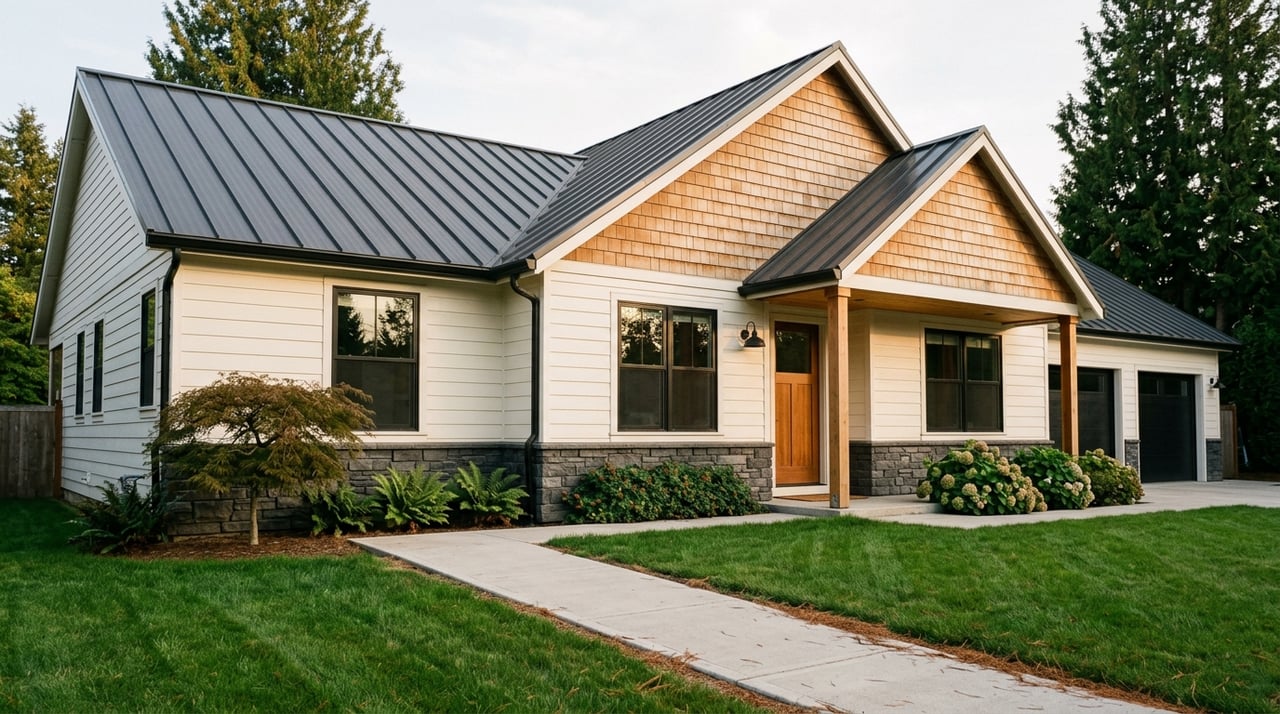
Choosing A Home In Maple Valley’s Evolving Market
June 25, 2026
June 25, 2026
If you are thinking about buying in Maple Valley, you are probably weighing two big questions at once: Can I find the right home here, and will it still make sense a few years from now? That is a smart way to approach this market. Maple Valley offers space, outdoor access, and a suburban housing profile that many buyers want, but it also comes with price competition and commute tradeoffs. This guide will help you understand how to choose a home in Maple Valley’s evolving market with more clarity and confidence. Let’s dive in.
Maple Valley remains a very competitive housing market, even though conditions are not quite as intense as the peak frenzy many buyers remember. In May 2026, Redfin reported a median sale price of $738,558, median days on market of 8, and an average of 2 offers per home. Realtor.com also reported 150 active listings, a median listing price of $799,000, and 23 days on market.
The cleanest way to read those numbers is as a range, not one exact price point. Sold-price data and listing data measure different parts of the market. For you as a buyer, the key takeaway is that there is more selection than a year ago, but demand is still strong.
There is also a useful shift happening beneath the surface. Redfin reported that homes sold in May 2026 were up 29.4% year over year, while the median sale price was down 2.8% and price per square foot fell 5.9%. That can mean a little more negotiating room than buyers saw during the hottest period, especially when a home is priced ambitiously or needs updates.
Maple Valley is not the budget option in South King County. Compared with nearby cities, it sits above Kent’s median sale price of $664,602 and Renton’s $712,074, and close to Covington at $751,164. That places Maple Valley in a middle-to-upper suburban price range for the area.
For many buyers, that price difference reflects a specific lifestyle choice. You are often paying for more detached-home inventory, a more suburban setting, and strong access to parks and trails. If that matches your priorities, Maple Valley can make sense even if you could spend less elsewhere.
One of the most important things to know about Maple Valley is that it is still overwhelmingly a single-family market. The city’s housing inventory appendix says 89.4% of structures are single-family, while townhouses account for 4.2% and apartments and condos make up very small shares. About 85% of housing structures have one unit, compared with 52% countywide.
That matters because it shapes both your search and your resale outlook. If you want a detached home with more space, Maple Valley gives you a clearer path than many nearby areas. If you want a condo or a broad range of attached-home choices, your options may feel more limited.
The city’s housing plan says households with children make up roughly half of all households, and senior households make up about 20%. That mix helps explain why demand often centers on homes with flexible floor plans, multiple bedrooms, bonus spaces, and layouts that can adapt over time.
As you shop, it is worth looking beyond simple bedroom count. A home office, extra living area, main-level room, or adaptable space may support your needs now and appeal to future buyers later.
Maple Valley is primarily a bedroom community, and that shapes daily life more than many buyers expect. The city’s comprehensive-plan analysis says only 6% of working residents both live and work in Maple Valley, while 94% commute elsewhere. Common destinations include Seattle, Renton, Redmond, Issaquah, and Bellevue.
Census QuickFacts puts Maple Valley’s mean travel time to work at 37.0 minutes. That is longer than Covington at 33.4 minutes, Kent at 30.4 minutes, and Renton at 29.7 minutes. In practical terms, Maple Valley often offers more suburban housing and recreation access, but usually asks for more drive time in return.
Transit connections are available, but they are not especially robust compared with more urban parts of the region. King County Metro lists Maple Valley Park & Ride with 122 spaces and Maple Valley Town Square with 97 spaces. Maple Valley Park & Ride is served by DART 907, while Maple Valley Town Square is served by Route 168 and DART 907.
That support can help some commuters, especially those connecting to Renton or Kent Station. Still, most daily commuting trips are likely happening by private car. Before you choose a home, test the drive times that matter most to your real schedule, not just an ideal one.
Not every part of Maple Valley will feel the same in daily use. The city’s economic-development appendix says commercial activity clusters around SR-18/Witte Road SE and SR-169/Kent-Kangley/Four Corners. It also notes that downtown design guidelines are intended to encourage more pedestrian-scaled development over time.
That suggests future convenience and growth are likely to remain node-based rather than spread evenly across the city. For you, that means location decisions should include more than the house itself. Think about how often you want quick access to shopping, services, commuting routes, and gathering places.
When comparing homes, consider questions like these:
A home that feels slightly less convenient on day one can still be a strong choice if it fits your long-term goals. The key is making that tradeoff intentionally.
Maple Valley’s parks and trails network is a real part of the city’s identity, not just a nice extra. The city maintains parks and trails, and its GIS resources include trails, walkways, and city parks and open spaces. For many buyers, this daily access to outdoor amenities is one reason Maple Valley stands out.
The Cedar River Trail is 17.4 miles long and passes through or near Maple Valley. It also intersects with the Green-to-Cedar Rivers Trail corridor, which is currently in design as an 11-mile connection to Flaming Geyser State Park. That type of trail connectivity supports day-to-day recreation and adds to the area’s long-term livability.
Lake Wilderness Park is another strong example. King County Public Health lists it as a summer lifeguarded beach. For buyers, amenities like this can support both your personal enjoyment of the area and broader resale appeal over time.
Maple Valley is changing, but not through sudden large-scale redevelopment. The city must plan for 1,720 net new housing units by 2044. Its housing plan says mixed-use residential is allowed in commercial zones and the future downtown, and multifamily projects with more than 10 units must include affordable units.
That points to a gradual expansion of housing choices over time. You may see more mixed-use, multifamily, and missing-middle options in designated areas, but not a dramatic shift away from Maple Valley’s suburban feel. The stronger expectation is incremental infill and focused project areas rather than broad urban transformation.
If you are buying a single-family home, today’s detached-home dominance still supports that choice. If you are hoping for much more attached inventory in the near future, it is reasonable to expect some growth in variety, but not a sudden flood of options.
Recent low-rise, townhouse, and single-family production has largely served higher-income households, while the city continues trying to expand more middle-range and multifamily options. That makes timing, location, and property type especially important when you evaluate long-term fit.
A smart home purchase is not just about getting under contract. It is also about choosing a property that will remain attractive when your life changes and it is time to sell. In Maple Valley, the strongest resale story comes from the combination of detached-home supply, demand for flexible family-sized layouts, and strong outdoor access.
That does not mean every home will perform the same way. Condition, layout, lot use, commute practicality, and proximity to activity nodes can all affect future appeal. In a market like this, it often pays to buy the home that works well for real daily living, not just the one with the flashiest finishes.
Before you make an offer, try to evaluate each home through these five lenses:
When you answer those questions clearly, the right choice usually becomes easier to see.
Buying in Maple Valley is about more than finding a nice house. It is about balancing space, lifestyle, commute, and future value in a market that is still competitive but offering a little more room for thoughtful decision-making. If you want experienced, local guidance as you compare homes in Maple Valley and nearby South King County communities, reach out to Phil Rodocker for a clear, strategic conversation.
Stay up to date on the latest real estate trends.
Markets change—but experience doesn’t lose its value. With decades of hands-on knowledge in the Pacific Northwest, we guide every client with clarity, strategy, and a steady approach. Whether you're buying, selling, or investing, we focus on making the process smooth, informed, and aligned with what matters most to you.
THE RODOCKER GROUP
JOHN L. SCOTT REAL ESTATE 4735 NE 4TH ST RENTON, WA 98059