Lake Tapps Closed Its Boat Launches in July. Waterfront Buyers Should Ask Why.
September 17, 2026
September 17, 2026
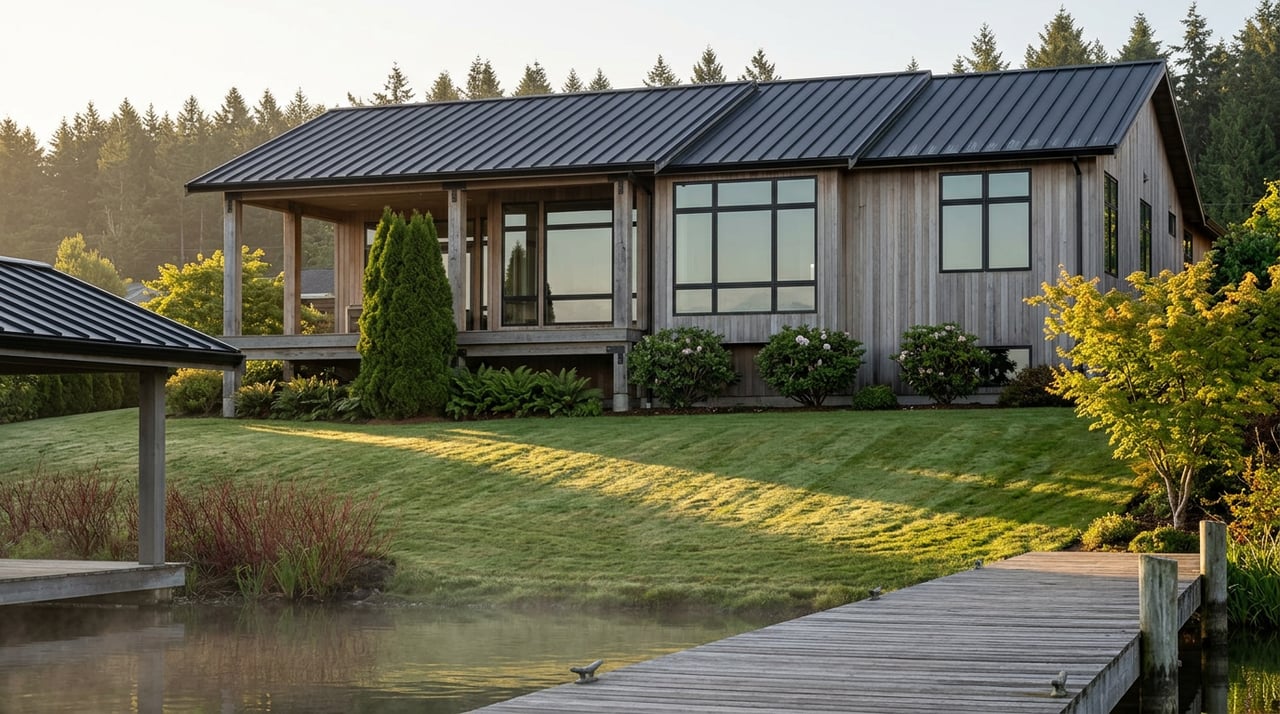
Damion Coughlin has lived on Lake Tapps Island long enough to know what a normal August looks like on the water. This year wasn't it. By late July, tree stumps that are usually a foot or more underwater were breaking the surface, and Coughlin found one the hard way. He'd already damaged one prop on this lake this year, so he hit a stump. Weeks later, the only two public boat launches on the lake, Allan Yorke Park and North Lake Tapps Park, both shut down for the season, months ahead of schedule.
If you're shopping Lake Tapps waterfront right now, that closure isn't a weather footnote. It's the clearest possible demonstration of something most listing photos never explain: the water line you see in a summer photo is not a permanent feature of the property. It's the output of a legal agreement, and this year that agreement ran into its own limits.
Lake Tapps is a reservoir, built in 1911 and owned and operated since 2009 by Cascade Water Alliance, a regional water utility. The lake doesn't fill itself from local runoff the way a natural lake does. Cascade diverts water from the White River into the reservoir under a set of water rights that trace back to a 2009 agreement between Cascade and the Lake Tapps community, plus a 2008 management agreement between Cascade, the Puyallup Tribe of Indians, and the Muckleshoot Indian Tribe.
Those agreements set a target: recreational levels between 541.5 and 543 feet from April 15 through September 30, dropping to roughly 538 to 539 feet starting November 1 so crews can inspect and maintain the dikes that hold the reservoir in place. That's the plan in a normal year.
The part that matters for 2026 buyers is the limit built into the water rights themselves. Cascade can only pull water from the White River when the river is running above certain legally defined minimum instream flow levels. When the river drops below that threshold, as it did this year under statewide drought conditions, Cascade is not permitted to divert water into the lake, no matter how much demand there is on the other end. The reservoir doesn't run low because anyone made a mistake. It runs low because the legal switch that lets water in gets turned off.
Here's how this year's drought stacked up against the reservoir's normal operating targets.
| Period | Target elevation | What happened in 2026 |
|---|---|---|
| Summer full pool (Apr 15-Sept 30) | 541.5 to 543 feet | Reservoir measured 541.79 feet on July 14, then 541.28 feet by July 31, tracking below target and still falling |
| Fall/winter drawdown (starting Nov 1) | 538 to 539 feet | Not yet reached, but 2026's summer numbers were already close to a normal winter low |
| Public boat launch access | Open Memorial Day through Labor Day in a typical year | Allan Yorke Park closed July 27; North Lake Tapps Park closed August 14, both months ahead of a normal season |
The gap between 541.28 feet in late July and the 538 to 539 foot winter target is smaller than most people would guess. A drought summer on Lake Tapps can put the reservoir within a couple of feet of where it normally sits in the dead of winter, months before the calendar says it should. Cascade's own CEO, John Taylor, has explained that the lake depends on snowpack feeding the White River, with water diverted in to maintain those recreational levels. When the snowpack and the summer rain both underperform, there's no reserve to draw on.
This is where the mechanism turns into paperwork, and where waterfront transactions on Lake Tapps differ from an ordinary lake purchase.
Cascade's own guidance to shoreline owners is direct: because the utility retains the legal authority to bring the reservoir back up to 543 feet under its current water rights, any new or modified bulkhead should be built to handle that full pool elevation, even in a year when the actual water line sits well below it. A bulkhead engineered for this year's drought line is a bulkhead built for the wrong number.
Dock design carries the same logic. A fixed dock that looks perfect in a July listing photo may sit high and dry, or awkwardly angled, once the reservoir drops toward winter levels. Floating docks and adjustable lifts handle that multi-foot seasonal swing more gracefully, which is one reason they tend to hold up better across a full ownership cycle than a fixed structure built around a single season's water line.
Any of this work, whether it's a new dock, a repaired bulkhead, or a modified boathouse, generally requires sign-off from Cascade in addition to whatever county, state, or federal permits apply to shoreline construction in Pierce County. Skipping that step doesn't just risk a fine. It risks discovering after closing that the structure you thought you bought isn't the one you're legally allowed to keep.
Before you write an offer on Lake Tapps waterfront, ask the seller or their agent for specifics rather than assurances:
These aren't hypothetical questions. They're the exact points where a Lake Tapps transaction can slow down or get renegotiated once an inspection or an appraisal turns up a structure that doesn't match its paperwork.
Waterfront pricing on Lake Tapps reflects how much buyers value direct access to the water. Homes in the waterfront collection closed at a median price around $1.71 million over the six months ending in late August 2026, a figure that sits well above typical pricing elsewhere in Bonney Lake. That premium is exactly why the operating details are worth the extra hour of due diligence. You're not just buying a house near water. You're buying into a managed system with its own legal ceiling and floor, and this year drew that floor closer to the surface than most buyers expected to see.
The lake will refill. Cascade's typical spring refill begins in mid-February, and the recreational full pool target of 541.5 to 543 feet remains the plan for next summer. But 2026 is a useful reminder that the plan depends on a river, and the river depends on weather nobody can guarantee. Treat the water line the way you'd treat any other negotiated term in a purchase agreement: verify it, don't just admire it in a photo.
Is this year's drought unusual for Lake Tapps, or does this happen often? Cascade has described 2026 as part of a statewide drought pattern affecting many Washington water bodies, with White River flows low enough to trigger the minimum instream flow restriction on diversions. Summers this dry are not the norm, but they are the scenario the reservoir's rules are built to handle.
Does the winter drawdown happen every year regardless of drought? Yes. The fall and winter drop to roughly 538 to 539 feet starting November 1 is routine, done for dike maintenance and inspection. What made 2026 different is that summer levels approached that range months early, and public boat access closed well before the normal winter closure window.
Do I need a permit just to repair an existing dock without changing it? Even routine repairs on shoreline structures typically require confirming your Cascade license status and checking in with the relevant permitting authority before starting work. If you're under contract on a waterfront property, this is worth confirming during your inspection period rather than after closing.
If you're weighing a Lake Tapps waterfront purchase, or wondering what a property's shoreline history actually looks like across a full season, The Rodocker Group can walk through the specifics with you before you write an offer.
Stay up to date on the latest real estate trends.
Markets change—but experience doesn’t lose its value. With decades of hands-on knowledge in the Pacific Northwest, we guide every client with clarity, strategy, and a steady approach. Whether you're buying, selling, or investing, we focus on making the process smooth, informed, and aligned with what matters most to you.
THE RODOCKER GROUP
JOHN L. SCOTT REAL ESTATE 4735 NE 4TH ST RENTON, WA 98059