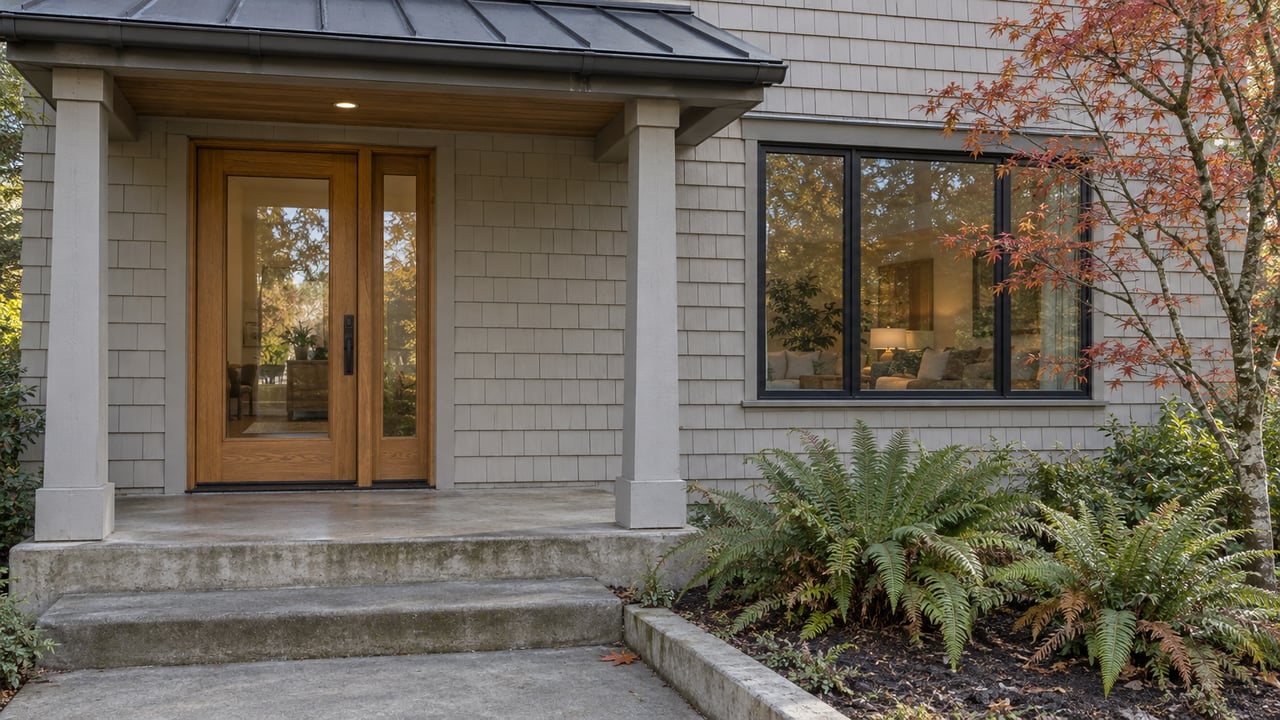
Seattle New Construction Townhomes in 2026: Why Buyers Have Leverage
October 29, 2026
Buyers looking at new construction in Seattle this fall have something they haven't had in years: builders who need to sell. In September 2026, King County had more new-construction homes listed than a year earlier, fewer of them closed, and the median new-construction sale price fell by more than $100,000. On paper this fits the story many people expected after Seattle rewrote its zoning in January to allow more homes on almost every residential lot.
The timing points the other way. A small building usually takes well over a year to go from permit to finished home, so homes listed this fall mostly come from projects begun before 2026. The permits that would replace them dropped sharply in 2026, even with the new zoning in place. This fall's leverage comes from an older pipeline being worked through, and the supply behind it is thinner.
The Northwest Multiple Listing Service reports new construction at the county level. Its September 2026 King County report shows supply going up while sales went down.
| King County new construction, residential and condo | September 2025 | September 2026 |
|---|---|---|
| New listings | 573 | 643 |
| Active listings | 1,179 | 1,336 |
| Closed sales | 243 | 182 |
| Median sale price | $1,089,950 | $979,500 |
New construction accounted for about 10.6% of all King County closings in September 2026, down from about 12.4% a year earlier. Builders of attached and condo product saw the same pressure as detached builders. The median for new-construction condo-category sales fell from $1,049,995 to $940,000, on 54 closings compared with 77.
A builder carrying finished homes has costs that add up every month. A falling median and a growing number of unsold units are what push that builder to negotiate. For a buyer, this matters more than the citywide price. The Seattle median for residential and condo sales combined was $850,000 in September 2026, exactly the same as September 2025.
NWMLS also breaks new-construction sales down by its own map areas. Through the first nine months of 2026, one area had by far the largest share of Seattle's new-home closings, and the totals were down in most areas.
| NWMLS map area | New-construction closings, Jan–Sept 2025 | Jan–Sept 2026 | Median sale price, Jan–Sept 2026 |
|---|---|---|---|
| 705 Ballard/Greenlake | 425 | 380 | $849,900 |
| 140 West Seattle | 188 | 146 | $769,000 |
| 710 North Seattle | 121 | 136 | $817,500 |
| 390 Central Seattle | 153 | 122 | $949,975 |
| 380 Southeast Seattle | 65 | 75 | $635,000 |
| 700 Queen Anne/Magnolia | 70 | 52 | $1,165,000 |
| 385 SODO/Beacon Hill | 30 | 31 | $655,000 |
| 701 Belltown/Downtown | 28 | 20 | $704,950 |
Together, these eight areas closed 962 new-construction sales through September 2026, compared with 1,080 over the same months of 2025. Ballard/Greenlake alone accounted for about four in ten of them. Its year-to-date median of $849,900 was about $112,000 lower than the September 2026 median for all Seattle residential-category sales, which was $960,000. That gap is roughly what townhome-style new construction costs compared with the overall residential market there. The NWMLS residential category doesn't separate townhomes from detached houses, though, so read the comparison as directional.
A few areas went against the trend. North Seattle and Southeast Seattle both closed more new homes than in 2025. Southeast Seattle's year-to-date new-construction median dropped from $699,950 to $635,000. Queen Anne/Magnolia's dropped from $1,377,500 to $1,165,000. If you're comparing neighborhoods, a new home in one map area can be priced very differently from one in another. The citywide median won't show you that.
Seattle's interim middle-housing rules took effect June 30, 2025. As The Urbanist reported, they allowed four units on lots across the city and six near light rail and RapidRide stops. The City Council adopted permanent zoning to comply with Washington's House Bill 1110, along with the One Seattle Comprehensive Plan, on December 16, 2025. According to the City's planning office, both took effect January 21, 2026.
You might expect more permits to follow. KUOW reported in September that Seattle issued just over 2,000 permits for new housing units in the first half of 2026. In all of 2021, it issued nearly 13,000. That count covers all housing types, not just middle housing. Even so, it shows how little is moving through the system.
Timing is what links those permits to the homes buyers see. The U.S. Census Bureau's Survey of Construction tracks how long buildings take to go from permit to completion. The NAHB's Eye on Housing summarized the 2025 national averages for multifamily buildings:
These are national and regional figures, not Seattle forecasts. They still give a rough idea of the lag. A small building permitted in the first half of 2026 would usually be finished somewhere between late 2027 and 2028. So the slow permit pace of 2026 is likely to show up as fewer finished new homes for sale a year or more from now. By the same national averages, most of today's growing inventory would have been permitted before that slowdown.
Zoning sets the maximum a lot can hold. Whether a builder actually builds depends on costs. KUOW described Seattle's construction slump as driven by high costs. State Rep. Nicole Macri told KUOW that development costs are high "because of tariffs, high interest rates, and even some local taxes."
A pending fee change is also part of the discussion. On September 18, 2026, Councilmember Dionne Foster proposed reducing the Mandatory Housing Affordability payments that fund below-market housing. The proposal included fee reductions of 60% and 80% for certain projects. The proposal was heard in committee as an information item that day, and no vote was recorded. The Urbanist reported that a final council vote was expected in January. Macri told KUOW she was concerned that ongoing interest in the measure has encouraged private developers to hold off and wait for a better deal.
Seattle's Office of Housing describes Lowrise zones as used mostly for lower-density development, especially townhomes. Two townhome sites a few blocks apart can face different costs depending on their zoning.
There's also a legal question. On September 9, the Central Puget Sound Growth Management Hearings Board found the environmental impact statement for the comprehensive plan inadequate. The City says the plan and its zoning changes remain in effect while it prepares a new analysis, which is due within a year, and that it's appealing the ruling. Costs, a possible fee cut, and a pending appeal all make it harder for a builder to commit to a new project.
Seattle's resale market and its new-construction market aren't moving together, and the same is true of houses and condos. In September 2026, the NWMLS Seattle residential category had 4.15 months of inventory and a $960,000 median, down from $975,000. The condo category had 8.30 months of inventory, a $530,000 median, and 25% fewer closings than a year earlier. Combined, Seattle had 2,891 active listings, up from 2,408, and 5.26 months of inventory.
Put this together with the permit numbers and you get a sense of who has time on their side. A buyer shopping new townhomes this fall is dealing with builders who have more unsold homes and lower county medians than a year ago. The construction that would keep that supply growing isn't moving through the permit system. More condo inventory and builder discounts reflect current conditions, and the permit data doesn't suggest those conditions will continue on their own.
Will the new zoning eventually bring more new homes? It allows them, and the City says the zoning remains in effect during the hearings board process. How many homes actually get built depends on construction costs, interest rates, and how the MHA fee question is settled. None of that had been decided by late October.
Does the proposed fee cut lower prices for buyers? The proposal is aimed at projects that owe MHA payments. Whether any savings would reach buyers isn't something the public record answers.
When will updated numbers show whether this window is closing? NWMLS publishes monthly. Its September figures came out October 6, so the October report should follow early next month. The county new-construction listing and closing counts are the ones to watch.
If you're weighing a new Seattle townhome against a resale home, or a Seattle address against one in South King County or on the Eastside, The Rodocker Group can help you compare builder inventory by map area and talk through how much room to negotiate a specific listing has right now. Contact us to start with the homes on your list.
Stay up to date on the latest real estate trends.
Markets change—but experience doesn’t lose its value. With decades of hands-on knowledge in the Pacific Northwest, we guide every client with clarity, strategy, and a steady approach. Whether you're buying, selling, or investing, we focus on making the process smooth, informed, and aligned with what matters most to you.
THE RODOCKER GROUP
JOHN L. SCOTT REAL ESTATE 4735 NE 4TH ST RENTON, WA 98059